
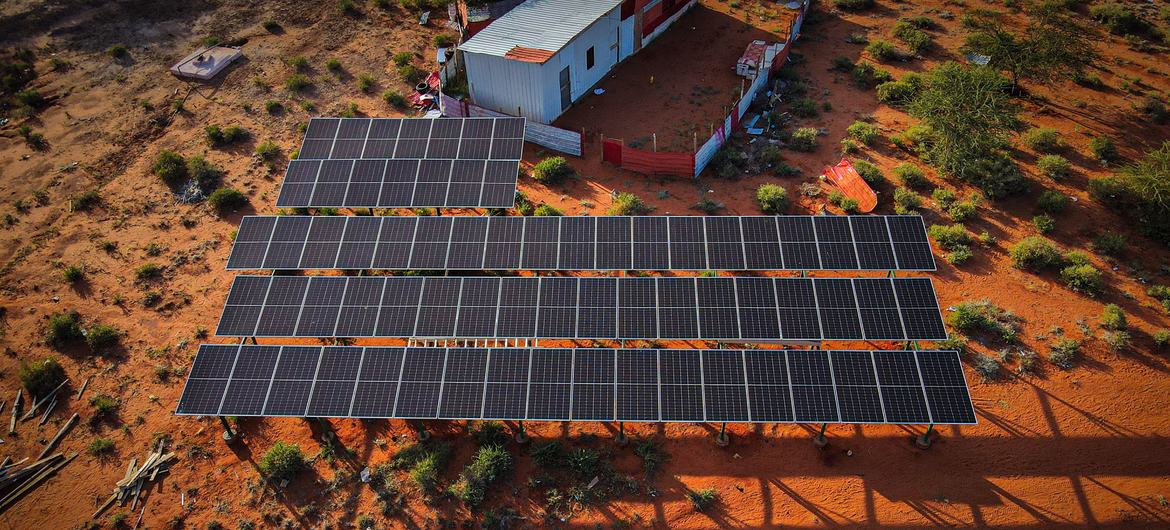
As countries’ renewable energy capacities reach record levels, they remain insufficient to meet the targets set for 2030, according to a new report released Tuesday ahead of the United Nations Climate Conference (COP30), which will be held in Brazil next month.
The report, titled Delivering the UAE Consensus: Tripling Renewable Power and Doubling Energy Efficiency by 2030, was published by the International Renewable Energy Agency (IRENA) — an intergovernmental organization — along with the Brazilian COP30 Presidency and the Global Renewables Alliance (GRA).
The findings are clear: renewable energy generation has never been higher, but progress still falls short of the milestones set two years ago during COP28 in the United Arab Emirates.
A Significant Lag
In 2024, global renewable capacity additions reached an unprecedented 582 GW. However, this remains insufficient to meet the target established under the COP28 UAE Consensus, which aims to triple renewable energy to 11.2 TW by 2030.
These goals are crucial in the context of global warming, largely driven by greenhouse gas emissions from fossil fuels.
“The world has broken records in renewable capacity, but records alone will not keep the 1.5°C goal alive,” emphasized IRENA Director-General Francesco La Camera.
Beyond renewable generation, the report highlights the urgent need for investments in grids, supply chains, and the manufacturing of green technologies — including solar, wind, batteries, and hydrogen.
Although renewable energy investments rose by 7% in 2024, financing still falls far short of the levels required to build strong and sustainable projects.
Ambitious Targets
The report calls for urgent action to:
- Integrate renewable energy targets into national climate plans ahead of COP30 in Belém;
- Double the ambition of Nationally Determined Contributions (NDCs) to align with the global renewable energy target;
- Increase renewable energy investments to at least $1.4 trillion per year between 2025 and 2030, more than double the $624 billion invested in 2024.
The report also estimates that G20 countries should account for more than 80% of global renewables by 2030, while the wealthiest developed nations in the G7 should take a leading role by raising their share to about 20% of global capacity this decade.
A Global Effort Needed
In light of the report’s findings, UN Secretary-General António Guterres said the clean energy revolution is “inevitable,” noting that “renewables are being deployed faster and at lower cost than fossil fuels, driving growth, jobs, and affordable energy access.”
He called for efforts “to scale up, step up, and speed up the just energy transition — for everyone, everywhere.”
According to Ben Backwell, President of the Global Renewables Alliance, “the private sector is the engine of the energy transition, providing three-quarters of global clean energy investment,” but it needs “long-term government plans aligned with national ambitions.”

Comments are closed, but trackbacks and pingbacks are open.