
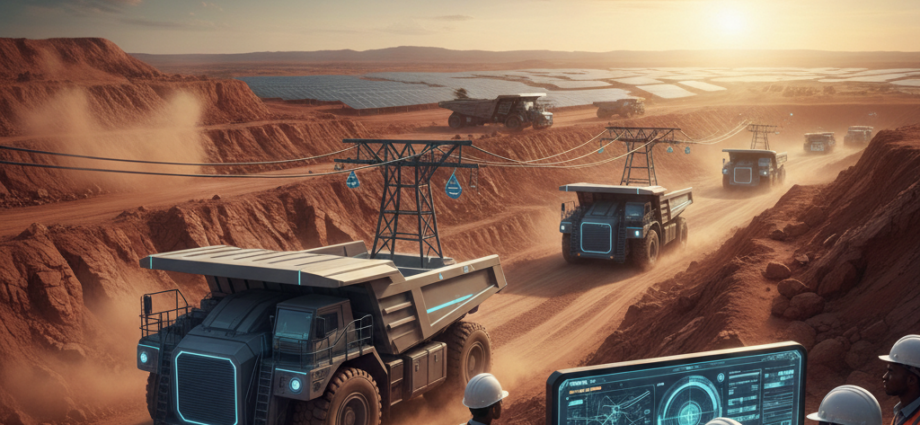
Long dominated by diesel-powered machinery, Africa’s mining equipment fleet is beginning to evolve. Driven by rising energy costs, environmental requirements, and the ESG objectives of major mining companies, electric and hybrid mining equipment is increasingly gaining attention. But is this transition truly suited to Africa’s operational realities?
1. Why the Electrification of Mining Equipment Is Gaining Momentum
Several factors explain the growing interest in electric equipment in African mines:
- Lower fuel costs, particularly at remote and landlocked sites
- Reduced CO₂ emissions and compliance with international standards
- Improved working conditions (less noise, reduced heat, better air quality)
- Pressure from investors and financial institutions on ESG performance
In underground mines in particular, reduced ventilation requirements can translate into significant economic savings.
2. Which Types of Equipment Are Concerned?
Electrification is now affecting several categories of mining equipment:
- Electric or trolley-assist mining trucks
- Electric load–haul–dump (LHD) loaders
- Electrified drilling rigs
- Hybrid equipment for open-pit mining
These solutions are being tested primarily in gold, copper, cobalt, and strategic metals mines.
3. Challenges Specific to the African Context
Despite their advantages, electric mining equipment faces major constraints:
a) Access to Energy
- Unstable or non-existent power grids
- Dependence on diesel generators
- Need for hybrid solutions (solar + storage + diesel)
b) Maintenance and Skills
- Need for technicians trained in electromechanics and battery systems
- Limited availability of spare parts
- Dependence on international OEMs
c) Initial Investment
- Higher purchase costs compared to diesel equipment
- Return on investment varies depending on the mine’s lifespan
4. Opportunities for African Mines
Despite these challenges, Africa has specific advantages:
- Strong solar potential to power mining infrastructure
- Development of mining microgrids
- Increasing access to green and climate finance
- Potential integration with long-term decarbonisation strategies
Some pilot mines in Southern and Central Africa are already showing encouraging results in terms of operating costs.
5. Electric or Diesel: A Gradual Transition Rather Than a Sudden Shift
For most African mining operations, the most realistic approach today remains:
- Fleet hybridisation,
- Targeted electrification of critical areas,
- Progressive adaptation of energy infrastructure.
Full electrification remains a medium- to long-term objective.
Electric mining equipment is neither a miracle solution nor a passing trend. In Africa, its deployment must be context-specific, gradual, and integrated into a comprehensive energy strategy at the mine-site level. For operators able to anticipate these shifts, electric equipment nonetheless represents a strategic lever for competitiveness and sustainability.

Comments are closed, but trackbacks and pingbacks are open.